
A Closer Look at Hydrogel Eye Patches, Peptide Formulations, and Clinical Testing
When researching the best hydrogel eye patches, consumers often compare price, peptide formulation, and brand recognition. A more meaningful comparison looks deeper at how ingredients are delivered, how results are measured, and how much of the eye contour is actually treated.
Eye patches have become a staple in many skincare routines. They promise smoother-looking skin, reduced puffiness, and a brighter eye area. The category now ranges from accessible peptide gels to luxury treatment-style patches.
Yet not all eye patches are designed in the same way.
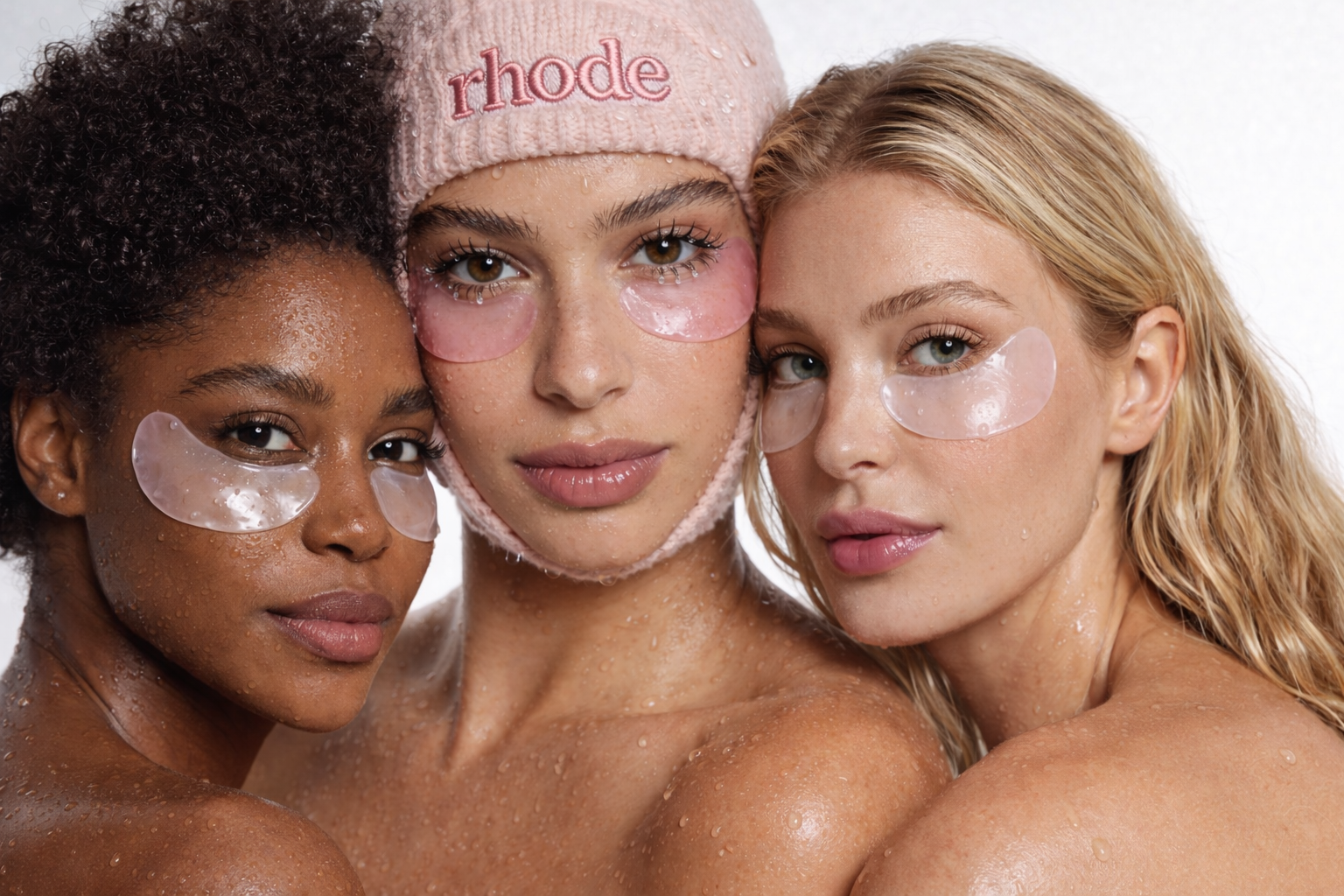
Below is a closer look at three widely searched products: Soke Hydrogel Eye Patch, Rhode Peptide Eye Prep Depuffing Eye Patches, and Augustinus Bader The Eye Patches.
For readers interested in learning more about our proprietary hydrogel eye patches and how they work, you can explore the full treatment here.
How We Evaluated These Eye Patches
To compare these treatments, several criteria were considered.
Clinical testing methodology
Whether results are measured through instrument analysis, consumer perception, or a combination of both.
Ingredient formulation
Particularly the presence and diversity of peptides commonly used in hydrogel eye patches.
Delivery material
Hydrogel and biocellulose materials interact with the skin differently and influence ingredient contact.
Patch coverage
The surface area treated by the patch can affect how much of the eye contour benefits from the treatment.
Price per treatment
Breaking down cost per use provides additional context when comparing value.
These factors create a clearer framework for comparing hydrogel eye patch treatments.
Best Hydrogel Eye Patches Compared
To help readers evaluate performance, pricing, formulation, and testing transparency, we created a side by side comparison of three widely searched hydrogel eye patches.
| Feature | Soke Eye | Rhode | Augustinus Bader |
|---|---|---|---|
| Price Per Treatment | $10.83 | $4.17 | $30 |
| Retail Price | $65 | $25 | $180 |
| Delivery Material | Three layer hydrogel matrix | Hydrogel | Biocellulose |
| Peptide Formulation | Multi peptide complex | Single peptide | Single peptide |
| Number of Peptides | 4 | 1 | 1 |
| Patch Coverage | XL contour coverage | Standard under eye | Standard under eye |
| Clinical Testing | Instrument measured cosmetic clinical testing with consumer perception data | Consumer perception | Brand reported clinical plus perception |
| Measurement Method | Advanced 3D imaging plus digital analysis | Not publicly disclosed | Not publicly disclosed |
Editor’s Note
Not all eye patches are designed with the same treatment goal. Differences in delivery systems, peptide formulation, and testing methodology can influence how a product performs.
Clinical Testing and Measured Results
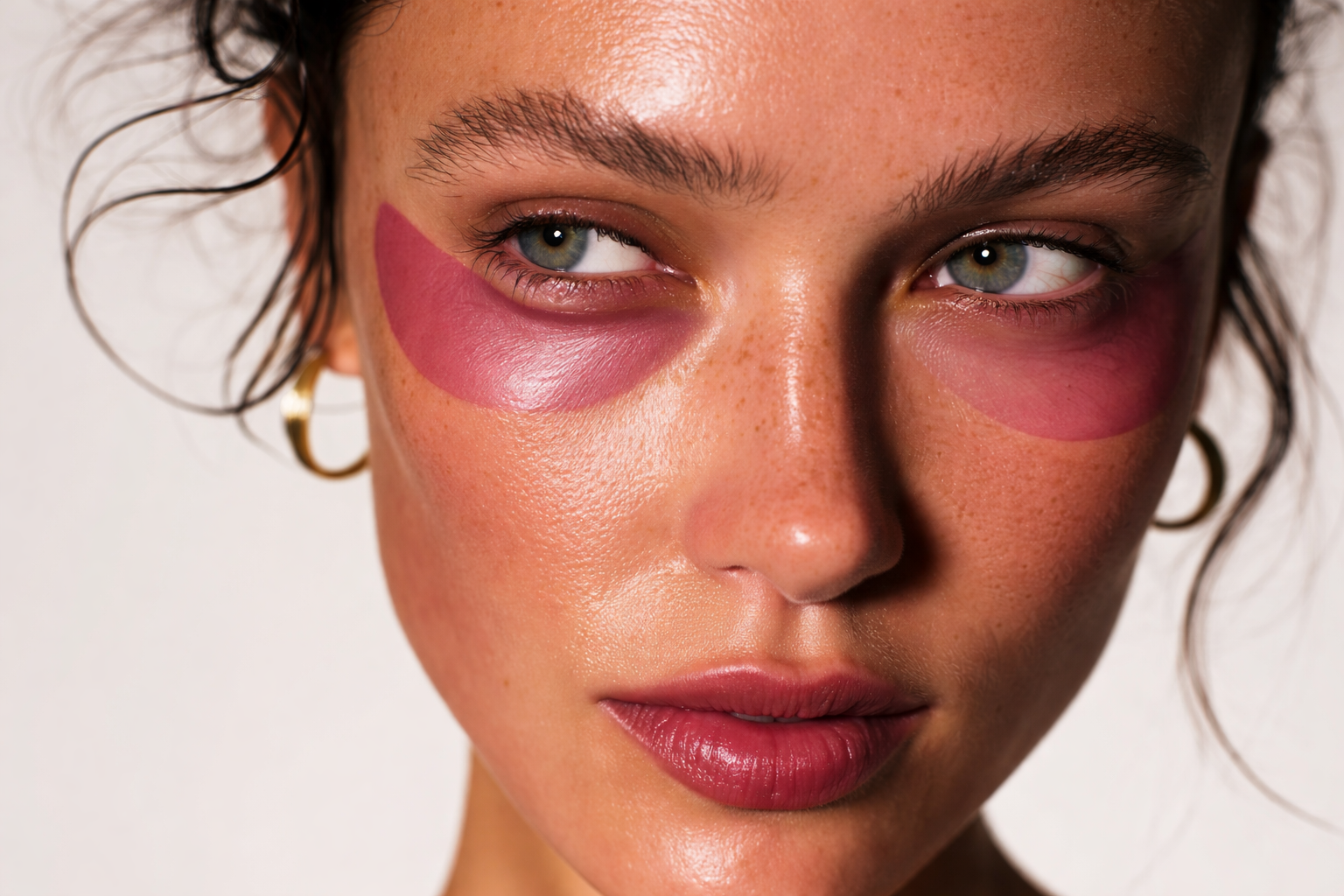
The phrase “clinically tested” appears frequently in skincare marketing. The testing behind that claim can vary.
Some brands rely primarily on consumer perception studies, where participants report how their skin looks or feels after using the product.
Other treatments undergo cosmetic clinical testing with imaging tools, which measure visible changes in hydration and skin texture.
Soke combines consumer perception feedback with instrument measured evaluation using advanced 3D skin imaging and digital analysis tools to assess visible improvements following a 30 minute treatment.
Augustinus Bader reports both immediate improvements and cumulative results after several weeks of use.
Rhode references consumer testing, though the measurement methodology is not publicly detailed.
For readers interested in clinical testing standards in skincare, you can learn more about Clinical Trials and Claim Validation Studies: Is There a Difference Between the Two?.
Hydrogel vs Biocellulose Patches
The material of an eye patch influences how ingredients interact with the skin.
Hydrogel patches are water based and flexible. They conform closely to the contours of the eye area and maintain consistent moisture contact during wear.
Both Soke and Rhode use hydrogel materials.
Soke’s hydrogel matrix incorporates a three layer delivery structure, including a dry moisture retaining layer designed to maintain hydration and support ingredient contact during the treatment session.
Rhode uses a traditional hydrogel format designed primarily for hydration and depuffing.
Augustinus Bader uses biocellulose, a fiber based material commonly used in sheet masks that adheres closely to the skin and supports longer wear.
More details about hydrogel delivery systems in skincare can be found in our guide to hydrogel technology.
Patch Coverage
Surface area is rarely discussed when comparing eye patches, yet it directly influences how much of the eye contour is treated.
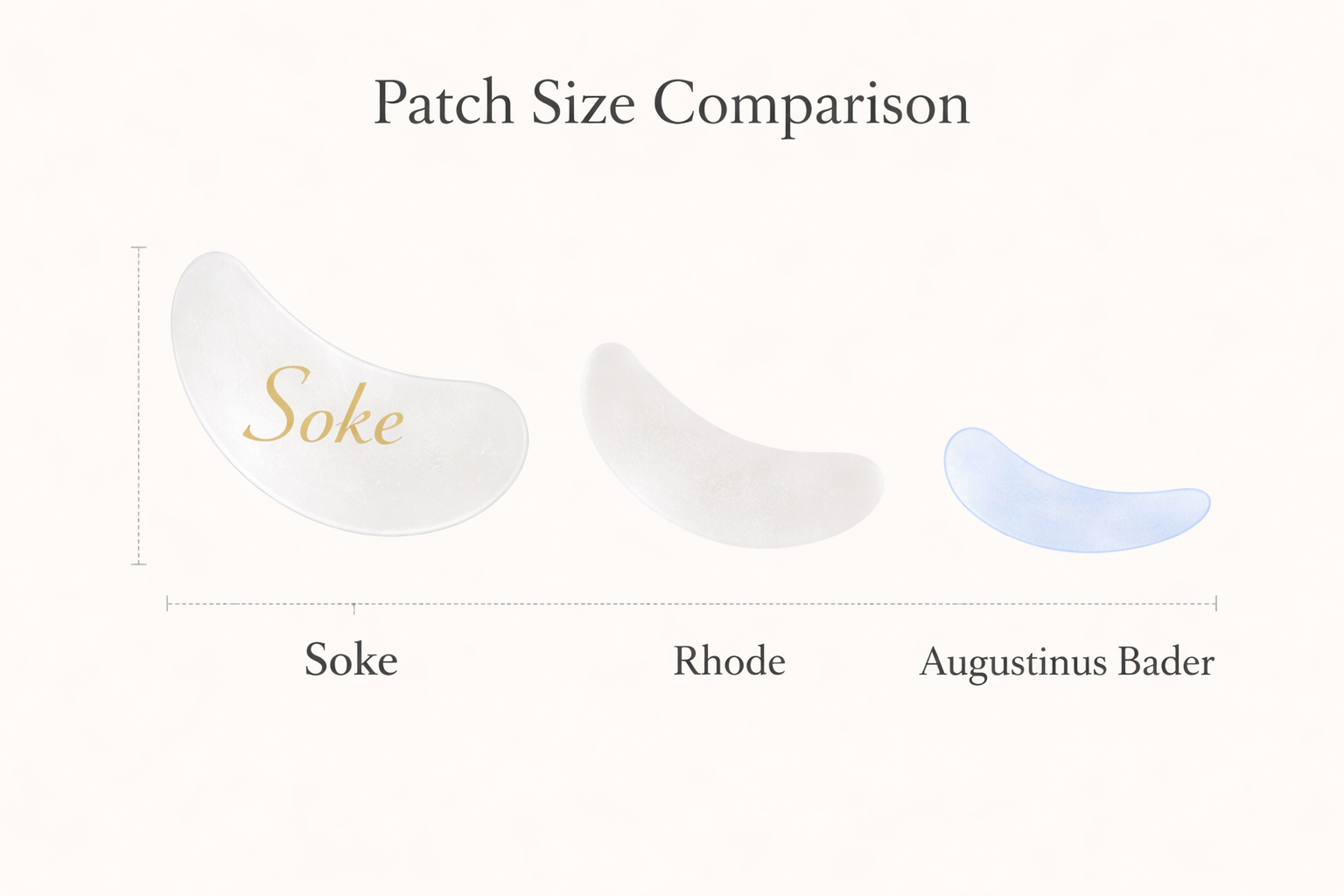
Soke’s XL patch extends beyond the under eye region to reach the cheekbone and outer eye where crow’s feet often appear.
Rhode and Augustinus Bader use a standard under eye patch shape.
Treating a larger surface area allows more of the eye contour to benefit from the ingredients in a single application.
Price and Value
Breaking down price per treatment provides additional perspective.
Rhode: $4.17 per treatment
Soke: $10.83 per treatment
Augustinus Bader: $30 per treatment
Price per treatment offers context, but delivery systems, peptide diversity, patch coverage, and testing methodology ultimately define performance.
Final Perspective
Eye patches serve different purposes.
Some prioritize accessibility and daily hydration. Others focus on luxury skincare routines or cumulative improvement over time. Some treatments emphasize visible results within a defined session.
Understanding these differences allows consumers to choose the option that aligns best with their skincare goals.
For readers exploring treatment style hydrogel masks, our guide to hydrogel eye patches designed for visible results provides additional information.
Frequently Asked Questions
What are the best eye patches for smoothing fine lines?
Eye patches formulated with peptides and hydrating ingredients can temporarily smooth the appearance of fine lines while improving hydration.
Are hydrogel eye patches effective?
Hydrogel eye patches maintain consistent moisture contact with the skin and support ingredient delivery during treatment.
Are hydrogel eye patches better than biocellulose?
Hydrogel eye patches and biocellulose patches perform differently depending on formulation and treatment goals. Hydrogel eye patches are often chosen for flexibility, close skin contact, and treatment comfort, while biocellulose is commonly used for longer wear formats.
How long should eye patches be worn?
Most hydrogel treatments are designed to be worn for 15 to 30 minutes. Soke Hydrogel patches have been clinically tested with a wear time of 30 minutes for the best results.